Source Non Slip Baby Hanger for Clothes, Trousers, and Underwear
Compare 30 non slip baby hanger options from verified suppliers in China. Buyers can evaluate specifications like material, size, and customization features for daily use or retail display needs.
Key considerations
Products List






Comprehensive Sourcing Guide
Strategic Sourcing Guide for Non-Slip Baby Hangers
Understanding the Product Category and Core Specifications
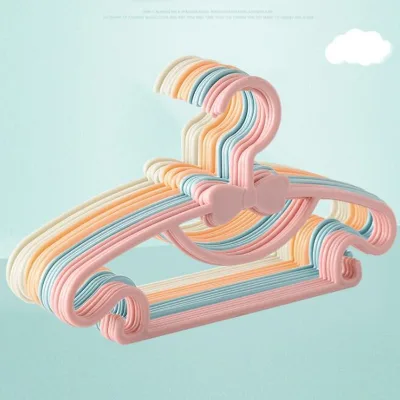
When sourcing non-slip baby hangers, buyers must first distinguish between general clothing hangers and those specifically engineered for infant wear. The core keyword "non-slip" implies a surface treatment or material composition designed to prevent delicate baby garments from sliding off, a critical feature given the lightweight nature of fabrics like cotton, silk, and synthetic blends used in baby clothing. Based on available market data, the product category is broadly defined as "Clothes hanger," with specific applications targeting "Tops," "Trousers," and "Underwear." The functional design often emphasizes "space-saving" capabilities, which is essential for nurseries and retail environments where storage density is a priority.
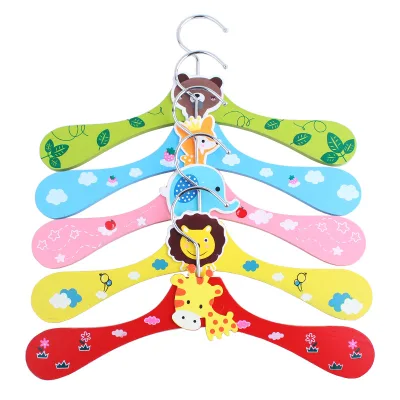
Material selection is the primary differentiator in this sector. The supplied data indicates a diverse range of materials, including "Plastic" (specifically "PP" or Polypropylene), "Velvet," and "Wooden" options. Plastic hangers, particularly those made from 100% new material, are common due to their durability and cost-effectiveness. Velvet-coated hangers are frequently associated with a "non-slip" characteristic, providing a high-friction surface that grips delicate fabrics without leaving marks. Wooden hangers offer a premium aesthetic but require specific care to maintain their finish. The "prod_model" varies significantly, ranging from generic "Plastic hanger" descriptions to specific model numbers like "WSWK01003," indicating that buyers must verify the exact model against their inventory needs.
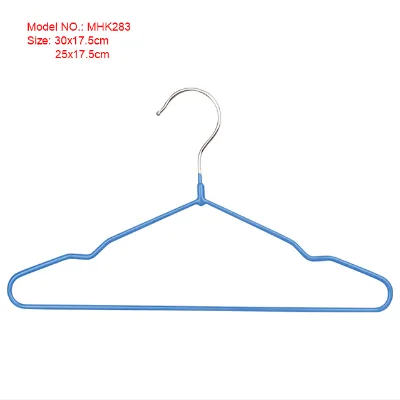
Dimensions are equally critical. Observed specifications include a diameter of 3.2mm for certain components and overall package sizes such as 17*29cm. However, dimensional tolerance is a variable that requires strict verification, with some listings noting a tolerance of >=±2cm. This variance suggests that buyers cannot assume uniformity across all suppliers without explicit confirmation. The "Length" is typically "Regular," but the "Style" can range from "Display" to "Multifunctional," depending on whether the hanger is intended for retail presentation or home storage.
Technical Attributes and Functional Design Requirements
The technical specifications of a non-slip baby hanger extend beyond simple dimensions to include surface treatments and structural integrity. The "Finish" of the product is often "Customized," allowing suppliers to apply specific textures or coatings that enhance the non-slip performance. For instance, a velvet finish provides a soft, grippy surface ideal for baby clothes, while a plastic finish might rely on molded ridges or rubberized coatings. The "Characteristic" of the hanger is a key decision point; some products are explicitly "Non Trouser Press," meaning they lack the secondary bar for hanging pants, while others are "With Trouser Press," offering versatility for full outfits.
The "Design" is frequently "Customized," allowing buyers to tailor the hanger to their brand identity. This includes the ability to add a "Customized Logo," which is a standard offering for OEM (Original Equipment Manufacturer) and ODM (Original Design Manufacturer) services. The "Color" is also "Customizable," enabling alignment with specific nursery themes or retail branding. The "Feature" of being "Environment Friendly" is increasingly important, with many suppliers highlighting the use of "100% new material" to ensure safety and recyclability, avoiding the use of recycled plastics that might contain harmful contaminants unsuitable for baby products.
Weight is another technical consideration. A typical weight for these hangers is observed around 25g, with a weight tolerance of <±5%. This consistency ensures that the hangers do not add excessive load to storage racks or cause instability when holding multiple garments. The "Functional Design" often incorporates "space-saving" elements, such as slim profiles or stackable designs, which are crucial for maximizing storage capacity in both home and commercial settings. The "Usage Occasions" are primarily "Home" and "Clothes Shop," indicating that the hanger must be durable enough for frequent handling in retail environments while remaining aesthetically pleasing for domestic use.
Compliance, Certification, and Safety Standards
Safety is paramount when sourcing products intended for babies. While the supplied data does not explicitly confirm specific certification statuses for every product, it lists background certifications such as "REACH" and "OEKO-TEX" as relevant industry standards. Buyers should verify that any plastic hangers comply with REACH regulations, which restrict the use of hazardous substances, ensuring the materials are safe for contact with baby skin and clothing. Similarly, OEKO-TEX certification is a trusted benchmark for textile safety, though its direct application to hangers depends on the specific coating or fabric used.
The "Condition" of the product is listed as "New," which is a baseline requirement. However, buyers must go beyond this to ensure the materials meet international safety standards for children's products. For plastic hangers, the "Proportion of new plastic materials" being 100% new is a strong indicator of quality and safety, as it reduces the risk of contaminants often found in recycled materials. Wooden hangers should be free from splinters and treated with non-toxic finishes. Velvet hangers must use fibers that do not shed or cause allergic reactions.
Buyers should also verify the "Standard" of the product. While some listings mention "Standard" specifications, others indicate "Customized" standards. This discrepancy highlights the need for a clear technical agreement before production. The "prod_standard" for packaging, such as "100pcs/carton" with specific carton dimensions (e.g., 36x36x62 cm or 383829), is also a compliance factor, as improper packaging can lead to damage during transit, rendering the hangers unusable.
Cost Drivers and Pricing Dynamics
The pricing of non-slip baby hangers is influenced by several factors, including material composition, customization level, and order volume. The observed listed price range in the market is broad, spanning from $0.04 to $10 per unit. This wide range reflects the diversity of product types, from basic plastic hangers to premium velvet or wooden options with custom branding. The "MOQ" (Minimum Order Quantity) ranges from 50 to 20,000 units, offering flexibility for both small startups and large retailers.
Material costs are a primary driver. "Plastic" hangers, especially those made from PP, are generally more affordable than "Velvet" or "Wooden" alternatives. The use of "100% new material" may incur a slight premium over recycled options but is essential for safety compliance. Customization adds significant cost; "Customized Logo," "Customized Design," and "Customized Finish" all require additional tooling and setup fees. The "Style" also impacts price; "Multifunctional" hangers with features like trouser presses or adjustable clips are more expensive than simple "Display" hangers.
Packaging is another cost factor. Options range from "Nude" (bulk) to "10PC/Shrinked" or "Carton/Box" packaging. The "prod_packing" specifications, such as carton sizes and quantities per carton, affect shipping costs and storage efficiency. Buyers should consider the total landed cost, including packaging and logistics, rather than just the unit price. The "Selling Units" are typically "Single item," but bulk purchasing often yields better per-unit pricing.
Supplier Evaluation and Geographic Considerations
Evaluating suppliers for non-slip baby hangers requires a thorough assessment of their capabilities and location. The "prod_origin" data indicates several key manufacturing hubs in China, including "Guilin," "Ningbo," "Yiwu," and "Guangdong." Each region has its own strengths; Ningbo and Yiwu are known for high-volume manufacturing and export efficiency, while Guangdong is a hub for diverse material processing. Buyers should verify the specific "place of origin" to ensure the supplier has the necessary infrastructure for their required volume and quality standards.
The "OEM or ODM" status is a critical factor. Most suppliers listed as "Acceptable" for OEM/ODM, meaning they can produce custom designs or manufacture based on buyer specifications. This flexibility is essential for brands looking to differentiate their products. However, buyers must confirm the supplier's capacity for "Customized" designs and their ability to maintain consistency across large batches. The "Design" capability should be assessed through a review of their portfolio and previous work.
Supplier reliability is also determined by their "prod_standard" and "prod_packing" consistency. A supplier that offers "Standard" specifications alongside "Customized" options demonstrates versatility. However, the "dimensional tolerance" of >=±2cm suggests that some suppliers may have looser quality controls, which could be problematic for precise retail displays. Buyers should request samples to verify the actual dimensions and finish quality before committing to a large order.
Quality Control and Inspection Protocols
Implementing a robust quality control (QC) protocol is essential to ensure that non-slip baby hangers meet safety and performance expectations. The "Weight tolerance" of <±5% is a key metric for consistency; hangers that are too heavy may damage storage racks, while those that are too light may lack structural integrity. Buyers should request weight verification reports for every batch. Similarly, the "dimensional tolerance" must be strictly monitored to ensure that hangers fit standard closet rods and display racks.
The "Finish" and "Material" quality are critical for the non-slip performance. For velvet hangers, buyers should inspect the fabric for shedding or uneven coating. For plastic hangers, the surface should be smooth without burrs or sharp edges that could damage baby clothes. The "Color" consistency is also important, especially for custom orders where brand alignment is required. Buyers should request color swatches and compare them against the approved samples.
Packaging integrity is another QC focus. The "prod_packing" specifications, such as "10PC/Shrinked" or "Carton," must be verified to ensure that the hangers arrive undamaged. The "Standard" of 100pcs/carton with specific dimensions (e.g., 36x36x62 cm) should be confirmed to prevent shipping issues. A pre-shipment inspection should include a random sample check of the packaging, weight, and dimensions to ensure compliance with the agreed specifications.
Long-Term Procurement and Strategic Sourcing
Long-term procurement of non-slip baby hangers requires a strategic approach that balances cost, quality, and supply chain stability. The "Usage" of these hangers in "Home" and "Clothes Shop" settings means they must be durable enough for repeated use. Buyers should consider the "Condition" of the product over time, ensuring that the materials do not degrade or lose their non-slip properties with extended use.
The "Feature" of being "Environment Friendly" is becoming a strategic differentiator. As sustainability becomes a priority for consumers, suppliers who can demonstrate the use of "100% new material" or eco-friendly production processes will have a competitive advantage. Buyers should evaluate suppliers based on their commitment to environmental standards and their ability to provide documentation for their claims.
Scalability is another consideration. With an "MOQ" range of 50 to 20,000, buyers should choose suppliers who can accommodate both small initial orders and large-scale expansions. The "Lead time" and "Production capacity" should be discussed to ensure that the supplier can meet demand fluctuations. The "Customization" options should be evaluated for their flexibility, allowing for adjustments in design, color, and packaging as market trends evolve.
In conclusion, sourcing non-slip baby hangers involves a careful balance of technical specifications, material safety, and supplier reliability. By focusing on the key attributes such as material composition, non-slip performance, and customization capabilities, buyers can secure a supply chain that meets the high standards required for baby products. The broad price range and diverse supplier base offer opportunities for strategic sourcing, provided that rigorous quality control and compliance checks are maintained throughout the procurement process.
| Attribute | Typical Observation | Verification Requirement |
|---|---|---|
| Material | Plastic (PP), Velvet, Wood | Confirm 100% new material for plastic; check for non-toxic finishes. |
| Non-Slip Feature | Velvet coating, textured plastic | Test friction coefficient; inspect for shedding or wear. |
| Dimensions | 17*29cm, 3.2mm diameter | Verify dimensional tolerance (>=±2cm); check against rack specs. |
| Weight | ~25g | Confirm weight tolerance (<±5%); ensure structural integrity. |
| Customization | Logo, Color, Design | Review sample for color accuracy and logo placement. |
| Packaging | Carton, Shrink-wrapped, Nude | Inspect carton dimensions and quantity per carton (e.g., 100pcs). |
| Origin | Guilin, Ningbo, Yiwu, Guangdong | Verify specific factory location and export capabilities. |
| Safety | REACH, OEKO-TEX (Background) | Request specific certification documents for the batch. |
FAQs
Can I customize the logo on non slip baby hangers?
Yes, suppliers accept customized logos for these hangers. You can request this service as part of OEM or ODM options, provided you meet the minimum order quantity requirements which range from 50 to 20,000 units depending on the manufacturer.
What materials are used for non slip baby hangers?
Common materials include plastic, specifically PP, velvet, and wood. Many plastic options are made from 100% new material to ensure safety, while velvet provides a high-friction surface ideal for preventing delicate baby garments from sliding off.
Which specifications define the size of these hangers?
Specifications vary, with some models having a diameter of 3.2mm and package sizes around 17 by 29 cm. Dimensions often have a tolerance of plus or minus 2 cm, so buyers should verify exact measurements before placing large orders.
How is the packaging handled for these hangers?
Packaging options include cartons, boxes, or shrink-wrapped bundles of 10 pieces. Standard cartons may hold 100 pieces with dimensions like 36 by 36 by 62 cm, though some suppliers offer customized packing standards to suit specific shipping needs.
What is the price range for non slip baby hangers?
The listed price range spans from 0.04 to 10 USD per unit. This variation depends on factors like material type, customization level, and order volume, with higher prices often associated with premium materials like velvet or wood.
Can these hangers be used for trousers and underwear?
Yes, applications include tops, trousers, and underwear for both home and clothes shop use. Some models feature a trouser press for versatility, while others are designed specifically for tops or general clothing storage.